Choosing the top edge AI server manufacturer in China requires more than comparing processor speeds. Buyers must examine deployment experience, thermal design, software compatibility, security controls, and long-term service support. A compact server beside a factory camera may face dust, vibration, unstable networks, and limited cooling. Laboratory benchmarks cannot fully represent that environment.
Jensen Huang, founder and CEO of NVIDIA, has said, “The next wave of AI is physical AI.” His observation explains why edge systems matter. They process video, sensor signals, and machine data near the operating site. This reduces latency and limits unnecessary data transfers. However, the strongest manufacturer is not automatically the one with the largest product catalogue.
This comparison will examine major Chinese suppliers, including their accelerator choices, industrial deployments, platform openness, and maintenance capabilities. It will consider established names such as Lenovo, Inspur, H3C, and Huawei, while avoiding an unsupported winner. Evidence matters more than marketing language. A server that performs well during a demonstration may struggle after months beside a production line.
The answer may also depend on the buyer. A railway operator needs rugged reliability. A retailer may value compact form factors and remote management. A research laboratory may prioritize GPU density and flexible software. There is no perfect shortlist.
That is the uncomfortable part.
This guide therefore treats “top” as a practical judgment, not a permanent title. Product generations change quickly, supply conditions shift, and field results can differ from published specifications. Readers should verify current certifications, service coverage, and independent testing before making a purchase.
Definition and Role of Edge AI Servers in China
Who Is the Top Edge AI Server Manufacturer in China?
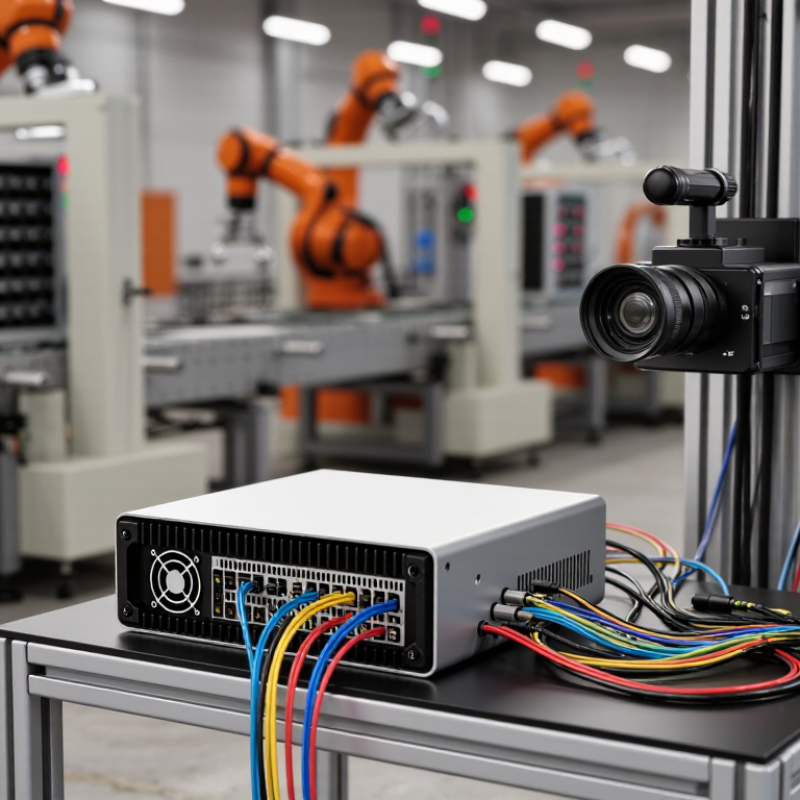
Edge AI servers are compact computing systems placed close to where data is created. They process camera feeds, sensor readings, voice commands, and industrial signals locally. This reduces the need to send every file to a distant cloud platform.
In China, these servers support smart factories, logistics centers, transport networks, hospitals, and energy facilities. A production line can detect surface defects within milliseconds. A warehouse can track moving equipment without waiting for a remote data center. Local processing also helps reduce bandwidth use and supports stronger data control.
The best manufacturer is not defined by hardware size alone. Buyers should examine processor performance, thermal design, security controls, software compatibility, and long-term maintenance. Field testing matters. A server that performs well in a laboratory may struggle beside a dusty machine or inside a hot roadside cabinet. That assumption can fail.
Reliable suppliers usually provide clear technical documents, stable firmware updates, and responsive engineering support. They should explain processing limits instead of promising perfect accuracy. Actual performance depends on model quality, sensor conditions, network design, and staff skills. The boundary between cloud and edge computing is not always clean. In some projects, a hybrid structure works better than a fully local system. Careful evaluation remains essential.
Key Criteria for Evaluating Chinese Edge AI Manufacturers
Who leads China’s edge AI server market depends on the workload, not advertising. A credible manufacturer should show repeatable performance in real deployment conditions. Ask for test results using your camera feeds, sensor rates, and target models. Factory benchmarks alone can mislead.
Evaluate compute density, accelerator compatibility, memory bandwidth, and latency under sustained loads. Thermal design matters when a server operates beside dusty production lines or inside small roadside cabinets.
Check power draw at idle and peak use. Inspect remote management, fault alerts, spare-part access, and repair procedures. These details often decide uptime.
Security evidence should include secure boot, access controls, signed updates, and clear vulnerability response. Data handling must fit local requirements and the laws of every operating region. Review manufacturing quality records, component traceability, and delivery consistency. Independent certifications help, but they do not replace site testing. A pilot lasting several weeks can reveal throttling, unstable drivers, or difficult maintenance.
Service depth is another practical test. Can engineers diagnose a failed node without waiting across several time zones? Can the manufacturer support model optimization after installation? Ask for written response targets and warranty terms.
Do not choose from a slide deck alone. No checklist is perfect.
My own evaluations have sometimes favored impressive throughput, then exposed weak thermal behavior in field trials. That mistake is useful: judge the complete operating cycle, not a single number.
Leading Chinese Companies in the Edge AI Server Market
China’s edge AI server market is led by manufacturers that combine local production, computing expertise, and practical deployment experience. Rather than relying on one universal model, these companies design compact systems for factories, hospitals, transport hubs, and retail sites. Their servers often support GPU acceleration, high-speed networking, and remote device management.
Latency matters. A camera analyzing defects on a production line cannot wait for distant cloud processing. Leading Chinese manufacturers therefore focus on low-latency inference, thermal control, and stable operation in dusty or crowded environments. Some systems use rugged enclosures and redundant power supplies. These details may seem ordinary, but they influence real maintenance costs.
Technical credibility also depends on testing. Reliable suppliers publish performance data, thermal results, and workload limits instead of presenting only peak speeds. Independent integration experience can reveal problems that laboratory tests miss. This approach is not perfect. Power consumption, software compatibility, and uneven service coverage still create concerns for buyers. Smaller edge servers may also struggle with large language models or continuous video analysis. Careful evaluation remains necessary before selecting a leading manufacturer for a specific deployment.
Technology, Performance, and Industry Applications Compared
China’s leading edge AI server manufacturer should be judged by technology, performance, and deployment reliability, not shipment volume alone. IDC forecasts global edge computing spending to reach 317 billion dollars by 2026. This growth favors compact servers with accelerator support, secure remote management, and efficient thermal design. The comparison is not perfect.
Performance depends on the workload. Vision inspection needs low latency and stable inference, while language models demand memory bandwidth and accelerator capacity. MLCommons benchmark results show that throughput varies sharply across models, batch sizes, and power limits. A useful evaluation should record response time, energy per inference, uptime, and software compatibility. Peak TOPS can mislead.
Industry applications reveal practical differences. In factories, a rugged server near production lines can identify surface defects within milliseconds. In ports, edge systems can analyze cameras despite unstable network links. In hospitals, local processing can reduce data transfer and support faster alerts, subject to strict privacy controls. Gartner predicted that 75% of enterprise-generated data would be created and processed outside traditional data centers by 2025. That prediction highlights the need for localized computing.
However, maintenance remains an overlooked weakness. Remote firmware updates, spare-part availability, and five-year support often matter more than impressive laboratory scores. The strongest manufacturer is therefore the one that balances computing density, power consumption, cybersecurity, and field service across real Chinese environments.
How to Determine the Top Edge AI Server Manufacturer in China
Who Is the Top Edge AI Server Manufacturer in China?
Determining the top edge AI server manufacturer requires more than comparing processor speed. IDC’s Worldwide Edge Spending Guide projects global edge spending to reach about US$378 billion by 2028. This growth increases demand for compact, reliable inference systems in factories, hospitals, ports, and retail sites.
Measure real deployment performance. Ask manufacturers to test identical workloads, models, and input streams. Record latency, throughput, power use, thermal stability, and recovery time. A server processing video beside a production line should respond within milliseconds, not after a distant cloud round trip. Gartner’s widely cited forecast expected 75% of enterprise-generated data to be created and processed outside traditional data centers by 2025. That shift makes local support and software compatibility critical.
Look for evidence, not attractive brochures. Review audited customer deployments, long-term failure rates, firmware updates, and spare-parts availability across China. Check compliance documentation and the manufacturer’s ability to customize cooling, networking, and accelerator configurations. Total cost should include electricity, maintenance, integration, and downtime. The cheapest unit may become expensive after six months. No ranking is perfect. A benchmark can still mislead when it ignores dust, unstable networks, or high temperatures. I would score each supplier with a weighted test plan, then repeat the trial after three months. That extra step is inconvenient, but it exposes weaknesses that laboratory results often hide.
How to Determine the Top Edge AI Server Manufacturer in China
This evaluation framework assigns practical weights to the key criteria used when comparing edge AI server manufacturers: inference performance, energy efficiency, accelerator compatibility, networking, reliability, and lifecycle support. The percentages represent recommended evaluation priorities rather than market-share data or a ranking of specific companies.
Conclusion
Edge AI servers are specialized computing systems designed to process data close to where it is generated, reducing latency, improving privacy, and supporting real-time decision-making. In China, they are increasingly used in smart manufacturing, transportation, energy management, healthcare, retail, and other data-intensive environments. When evaluating an edge ai server manufacturer, buyers should consider processing performance, AI acceleration, energy efficiency, reliability, scalability, security, software compatibility, customization capabilities, and after-sales support.
The leading manufacturers can be compared through their hardware architecture, computing capacity, deployment flexibility, operating stability, and ability to support different industry requirements. However, identifying the top edge ai server manufacturer in China should not depend on product specifications alone. A responsible evaluation should combine independent testing, total ownership cost, delivery capability, technical services, compliance practices, and proven performance in real-world applications. The most suitable supplier is the one that provides a balanced solution tailored to the customer’s workload, infrastructure, budget, and long-term development plans.
 Borevo
