Borevo
Cloud AI infrastructure is moving from experimental labs into production environments, where speed, reliability, and operating cost matter every day. IDC’s Worldwide Quarterly Server Tracker shows continued growth in accelerated computing demand, driven by generative AI workloads and large-scale data processing. Gartner also identifies AI infrastructure as a major technology investment area, while the International Energy Agency warns that data-center electricity demand is rising rapidly. These findings change how global buyers should evaluate server suppliers.
A capable cloud ai server manufacturer must offer more than powerful GPUs. Buyers should examine accelerator compatibility, memory bandwidth, networking, cooling design, firmware support, and long-term service coverage. NVIDIA’s AI Enterprise ecosystem, the MLPerf Training and Inference benchmarks, and Omdia’s server market research provide useful reference points. Still, benchmark results do not always reflect performance in a real data center. A server may look impressive on paper, yet struggle with heat, power limits, or delayed replacement parts.
This guide reviews ten manufacturers serving international cloud and enterprise buyers. It considers technical capability, manufacturing experience, supply-chain resilience, security practices, and regional support. The shortlist is not universally correct. Procurement priorities differ between a research laboratory, a public cloud platform, and a mid-sized company. Some suppliers lead in customization, while others deliver stronger software integration or global maintenance. Readers should verify current specifications, certifications, warranty terms, and total cost before signing a contract. The market changes quickly. That is the uncomfortable part.
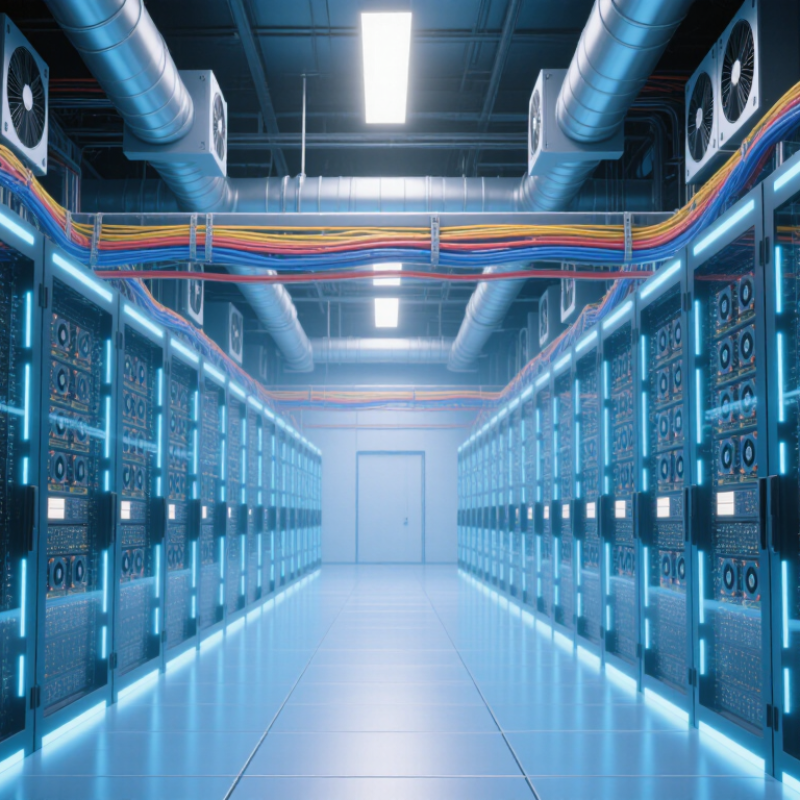
A cloud AI server manufacturer does more than assemble racks with processors. It designs systems for sustained workloads, where heat, power, memory, and network traffic remain constant. Engineers should explain how each server handles model training, inference, and data-intensive analytics. Clear documentation matters.
Look for evidence from production deployments, independent testing, and measurable service records. A credible manufacturer publishes thermal limits, power consumption, accelerator compatibility, and firmware procedures. It also explains failure recovery. For example, can technicians replace a faulty power module without stopping every workload? Can monitoring tools identify overheating before performance drops? These details reveal practical experience.
Security and compliance shape the buying decision. Manufacturers should support controlled access, encrypted management channels, secure updates, and traceable component records. Regional certifications may also affect installation and data-center operation. Support quality matters just as much. Buyers need spare-parts planning, response-time commitments, and engineers who understand complex cluster failures.
No design is flawless. A high-density rack may deliver impressive performance but create difficult cooling demands. A lower-cost configuration may increase maintenance work later. Product claims can also hide assumptions about workload size or electricity prices. Buyers should test representative models, request transparent benchmarks, and examine references from similar environments. The strongest manufacturers accept difficult questions and revise specifications when field evidence exposes weaknesses.
Cloud AI servers depend on more than accelerator count. Modern systems combine parallel accelerators, high-bandwidth memory, fast interconnects, and distributed storage. These technologies reduce data movement during model training. Stanford AI Index 2024 reports that notable AI training compute has doubled about every eight months since 2010. Buyers therefore need scalable rack designs, not only powerful chips. Remote direct memory access can reduce network overhead. Data processing units can also separate security and networking tasks from the main processors.
Cooling is becoming equally important. Direct liquid cooling removes heat more efficiently than traditional air systems. The International Energy Agency estimates that data centers used about 460 terawatt-hours globally in 2022. Demand could exceed 1,000 terawatt-hours by 2026. This makes power efficiency, thermal monitoring, and workload scheduling essential purchasing criteria. Confidential computing can protect sensitive workloads during processing. However, its performance cost is sometimes underestimated. Real benchmarks should include cooling limits, memory pressure, and network congestion.
Tips: Ask manufacturers for measured performance per watt, not peak accelerator figures. Request tests using your model size and batch settings. Check firmware update policies, spare-part access, and monitoring compatibility. A cheaper server may appear efficient, yet become expensive under sustained workloads. Reviewers should also question whether every advanced feature improves production results. Some impressive specifications remain difficult to use in practice.
| Rank | Manufacturer Profile | Typical AI Server Form Factor | Accelerator Configuration | Accelerator Memory | Host CPU Architecture | System Memory | High-Speed Interconnect | Network Connectivity | Thermal Design | Best-Fit Cloud Workloads |
|---|---|---|---|---|---|---|---|---|---|---|
| 1 | Profile 01 | 8-accelerator, 8U rack server | 8 high-end data-center accelerators with direct peer communication | 640–1,280 GB total high-bandwidth memory | 2-socket x86 server processors | 1–2 TB DDR5 ECC | Dedicated accelerator fabric, up to 900 GB/s per device class | 2–8 ports at 200–400 Gb/s | Direct liquid cooling or rear-door heat exchanger | Large-language-model training and distributed inference |
| 2 | Profile 02 | 4-accelerator, 4U rack server | 4 training accelerators connected through a high-bandwidth switching plane | 320–640 GB total high-bandwidth memory | 2-socket x86 server processors | 512 GB–1 TB DDR5 ECC | PCIe Gen5 plus accelerator-to-accelerator links | 2–4 ports at 100–400 Gb/s | High-pressure air cooling with redundant fans | Model fine-tuning, computer vision, and batch inference |
| 3 | Profile 03 | 8-accelerator, 6U rack server | 8 power-optimized accelerators for dense cloud deployments | 384–768 GB total high-bandwidth memory | Dual-socket x86 or Arm server processors | 512 GB–1.5 TB DDR5 ECC | PCIe Gen5 switching with fabric-aware topology | 4–8 ports at 100–200 Gb/s | Air cooling with optional liquid-cooled cold plates | High-volume inference and recommendation engines |
| 4 | Profile 04 | 2-accelerator, 2U rack server | 2 enterprise accelerators with large local memory capacity | 96–192 GB total accelerator memory | Single- or dual-socket x86 processors | 256–768 GB DDR5 ECC | PCIe Gen5 direct attachment | 2 ports at 25–100 Gb/s | Redundant air cooling | General-purpose inference, analytics, and virtual workstations |
| 5 | Profile 05 | 8-accelerator, 8U liquid-ready server | 8 high-density accelerators with chassis-level power monitoring | 640–1,536 GB total high-bandwidth memory | 2-socket x86 server processors | 1–4 TB DDR5 ECC | Low-latency accelerator fabric with multi-node scaling | 4–8 ports at 200–400 Gb/s | Direct-to-chip liquid cooling | Foundation-model pre-training and scientific computing |
| 6 | Profile 06 | 4-accelerator, 4U modular server | 4 interchangeable accelerators with field-serviceable modules | 256–512 GB total high-bandwidth memory | Dual-socket x86 processors | 512 GB–2 TB DDR5 ECC | PCIe Gen5 with remote direct-memory access | 2–4 ports at 100–200 Gb/s | Air cooling with optional rear-door heat exchanger | Enterprise AI platforms and mixed virtualization |
| 7 | Profile 07 | 1-accelerator, 1U edge-cloud server | 1 compact accelerator optimized for low-latency inference | 24–80 GB accelerator memory | Single-socket x86 or Arm processor | 128–512 GB DDR5 ECC | PCIe Gen4 or Gen5 direct attachment | 2 ports at 25–100 Gb/s | High-efficiency air cooling | Edge inference, video analysis, and API serving |
| 8 | Profile 08 | 4-accelerator, 4U storage-integrated server | 4 accelerators paired with high-throughput local storage | 192–512 GB total accelerator memory | Dual-socket x86 processors | 512 GB–1 TB DDR5 ECC | PCIe Gen5 switching and remote direct-memory access | 2–4 ports at 100–200 Gb/s | Air cooling with temperature-controlled fan zones | Retrieval-augmented generation and data-intensive inference |
| 9 | Profile 09 | 8-accelerator, 10U expandable server | 8 accelerators with expansion capacity for multi-node clusters | 512–1,024 GB total high-bandwidth memory | 2-socket x86 server processors | 1–2 TB DDR5 ECC | Dedicated scale-out fabric with topology management | 4–8 ports at 200–400 Gb/s | Liquid-ready chassis with redundant power shelves | Distributed training, simulation, and digital-twin workloads |
| 10 | Profile 10 | 2-accelerator, 2U energy-efficient server | 2 low-power accelerators for shared cloud tenancy | 64–192 GB total accelerator memory | Single- or dual-socket x86 processors | 256–768 GB DDR5 ECC | PCIe Gen4/Gen5 with standard server expansion | 2 ports at 25–100 Gb/s | Energy-efficient air cooling | Development environments, virtual desktops, and small-model inference |
Note: Specifications are representative ranges based on commonly deployed cloud AI server architectures. Actual configurations vary by accelerator generation, power limits, firmware, networking design, and data-center requirements.
Comparing the top ten cloud AI server manufacturers requires more than checking processor speed. IDC forecasts global AI infrastructure spending will reach about $235 billion by 2028. Buyers should examine how each manufacturer handles accelerator density, memory bandwidth, networking, and rack-scale integration. Ask for measured training results, not attractive laboratory claims.
Thermal engineering deserves close attention. The IEA estimates data centers used roughly 415 terawatt-hours of electricity in 2024. Liquid cooling, airflow design, and power efficiency can therefore change operating costs significantly.
Request PUE-related evidence, cooling specifications, service procedures, and component replacement times. A fast server that overheats under sustained workloads is not a strong investment.
Reliability must be documented. Uptime Institute reported that 54% of surveyed organizations experienced a recent outage costing over $100,000. Compare failure rates, burn-in testing, firmware controls, remote diagnostics, and spare-parts coverage. Supply-chain transparency also matters, especially for memory, accelerators, and power modules. Look for ISO certifications and independently verifiable test records. Contract terms can reveal more than brochures.
Total cost is often underestimated. Include electricity, cooling, software support, migration labor, and end-of-life recycling. Insist on a pilot deployment with real workloads. A manufacturer may perform well in benchmarks but disappoint in a mixed production cluster. I would keep one criterion deliberately uncomfortable: how honestly the supplier explains limitations. That answer is often imperfect, but useful.
Choosing among the top 10 cloud AI server manufacturers requires more than comparing processor counts. Global buyers need dependable systems for training, inference, analytics, and high-volume virtual machines. The strongest manufacturers typically offer dense accelerator servers, fast networking, liquid or advanced air cooling, and flexible rack designs. These details affect performance inside a real data center.
Look for manufacturers with documented test results, transparent energy ratings, and clear support procedures. A reliable supplier should explain firmware updates, spare-part availability, warranty coverage, and response times across different regions. Check whether its servers support common orchestration tools and major cloud platforms. Independent workload testing matters more than attractive peak specifications. Ask for results using your own model sizes, storage patterns, and network limits.
Procurement teams should also examine factory quality controls, security documentation, and supply-chain resilience. Regional certifications and data-residency requirements can change the final decision. Small details matter. For example, a poorly designed cable path may slow maintenance and increase downtime. Some manufacturers promise impressive delivery schedules, yet component shortages can disrupt them. This is where careful verification becomes essential. I would not treat a polished benchmark as complete evidence. Thermal behavior, technician training, and long-term power costs deserve equal attention. A manufacturer may look perfect on paper and still disappoint during a difficult overnight repair.
Comparative composite index based on publicly reported production scale, AI-system portfolio breadth, data-center integration, and international delivery coverage. The index is normalized to 100 and does not represent company revenue or market share.
Higher scores indicate stronger overall suitability for large-scale cloud AI deployments, including accelerator server availability, rack-scale integration, networking compatibility, regional support, and delivery capacity. The comparison reflects market conditions reported across 2024–2025 industry research.
Choosing a cloud AI server manufacturer requires more than comparing GPU counts. Examine the complete system, including processors, memory, networking, storage, and cooling design. Ask for workload-based benchmarks, not attractive peak figures. A language model may need different performance from a computer vision pipeline. Test response time, power use, and scaling behavior with your own models. Performance is not everything.
Reliability depends on more than hardware quality. Review warranty terms, replacement procedures, firmware updates, and technical support hours. Confirm the manufacturer can provide consistent component supplies during demand spikes. Check security controls, data-center certifications, and regional data requirements before signing a contract. Request references from customers with similar training volumes. Vague answers deserve careful attention. Small details matter.
Calculate total cost over three to five years. Include electricity, cooling, software licenses, network traffic, maintenance, and possible downtime. Ask whether the server supports future accelerators, faster memory, and standard management tools. A flexible platform can protect your investment when models change. However, no checklist is perfect. I would still run a controlled pilot with realistic datasets, failure tests, and peak-load conditions. A polished demonstration can hide inconvenient limits. Manufacturers that document assumptions clearly are usually easier to evaluate and support.
Look beyond accelerator count. High-bandwidth memory, fast interconnects, distributed storage, and scalable rack designs also matter.
Dense workloads create substantial heat. Direct liquid cooling can remove heat efficiently and support stable operation.
Request measured performance per watt, not peak accelerator figures. Test your model size, batch settings, storage patterns, and network limits.
Benchmarks should measure response time, power use, scaling, memory pressure, cooling limits, and network congestion.
Review warranty coverage, replacement procedures, firmware updates, spare-part access, and regional technical support. Ask about overnight repair response times.
Include electricity, cooling, software licenses, network traffic, maintenance, and possible downtime. A cheaper server may cost more during sustained workloads.
Check support for future accelerators, faster memory, standard management tools, and common orchestration systems. Flexibility can protect the investment.
Examine confidential computing options, security documentation, data-center certifications, and regional data-residency requirements before signing an agreement.
Not completely. Run a controlled pilot with realistic datasets, failure tests, peak loads, and overnight monitoring.
Poor cable routing can slow maintenance and increase downtime. Supply shortages may also disrupt promised delivery schedules. Verify both carefully.
A cloud ai server manufacturer designs and produces high-performance computing systems built for remote, scalable, and secure artificial intelligence workloads. This role involves integrating advanced processors, accelerators, high-speed memory, efficient networking, storage solutions, virtualization, and liquid or air cooling technologies. Cloud AI servers must support demanding applications such as model training, inference, data analytics, and large-scale automation while maintaining reliability, energy efficiency, and flexible deployment options.
When comparing the top 10 cloud AI server manufacturers for global buyers, organizations should evaluate processing performance, system scalability, software compatibility, security features, data-center efficiency, technical support, delivery capability, warranty coverage, and total ownership cost. The right choice depends on workload requirements, regional compliance needs, budget, integration goals, and future expansion plans. A careful comparison of product architecture, service quality, customization options, and long-term stability can help buyers select a dependable manufacturing partner that supports sustainable AI growth.
