Borevo
Choosing a top artificial intelligence server manufacturer requires more than comparing processor names or advertised speeds. Real performance depends on workload, cooling design, software support, and long-term reliability. A research laboratory may need dense GPU systems for training large language models. A financial company may prioritize secure inference, predictable latency, and efficient power use.
This overview examines leading manufacturers through practical criteria, including accelerator compatibility, memory capacity, high-speed networking, service coverage, and deployment flexibility. Details matter. A server rack running multiple GPUs can generate substantial heat, while poor airflow may reduce performance or shorten component life. Liquid-cooling options, redundant power supplies, and remote management tools can therefore influence a purchasing decision as much as raw computing power.
Independent benchmarks, customer experience, warranty terms, and technical documentation also deserve careful attention. Vendor claims are useful, but they should not replace testing under real workloads. Rankings can change quickly. A manufacturer that performs strongly for model training may be less suitable for edge inference or enterprise virtualization. That limitation is worth acknowledging. No single supplier fits every organization.
By comparing global manufacturers with evidence-based standards, this guide aims to support informed decisions rather than promote a single brand. It considers established server expertise, accelerator partnerships, energy efficiency, security practices, and after-sales support. Readers should still validate compatibility with their own data centers, budgets, compliance requirements, and engineering teams before purchasing. Small configuration details often decide whether an artificial intelligence server delivers dependable value or becomes an expensive bottleneck.
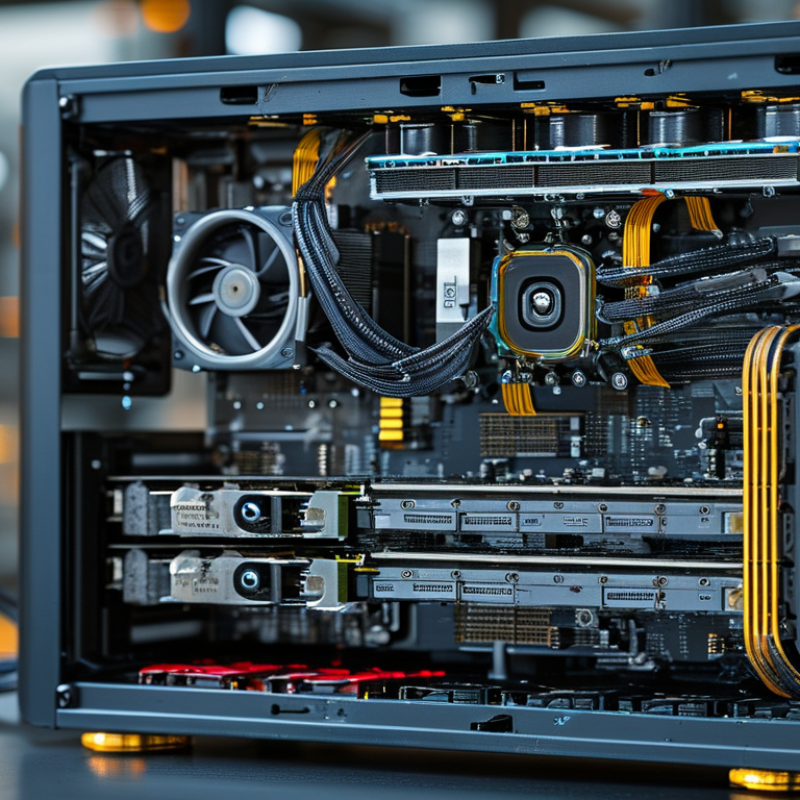
Artificial intelligence servers are becoming the core infrastructure for training and deploying large models. IDC’s Worldwide AI and Generative AI Spending Guide forecasts global AI spending will exceed 632 billion US dollars by 2028. This expansion is increasing demand for high-density servers, advanced accelerators, and faster interconnects.
The market includes original equipment manufacturers, contract manufacturers, and specialist system integrators. Their systems typically combine accelerator modules, high-speed memory, liquid cooling, and clustered networking. TrendForce projected AI server shipments would grow about 28% in 2025, showing strong demand from cloud providers and research institutions. However, shipment growth does not guarantee efficient operations.
Power is a major constraint. A single high-density rack can require substantially more electricity and cooling capacity than a conventional enterprise rack. Operators must examine performance per watt, service response, firmware support, and component availability. Price alone is a weak purchasing measure.
Reports can also differ. Forecasts depend on model adoption, export rules, data-center construction, and electricity costs. Some projections may age quickly. That matters. A server selected today may face thermal or networking limits within three years. Buyers should validate benchmark results using their own workloads, including inference latency, memory usage, and sustained training performance.
Artificial intelligence server manufacturing now depends on more than fast processors. It requires coordinated advances in accelerators, memory, networking, cooling, power delivery, and software.
Modern AI servers use specialized accelerators to process parallel workloads efficiently. High-bandwidth memory reduces delays when models handle massive datasets. Advanced interconnects link hundreds of processors inside one computing cluster. This design helps distribute training tasks across machines. However, faster hardware also creates serious thermal pressure. The International Energy Agency reported that global data center electricity use may exceed 1,000 terawatt-hours by 2026. Cooling is no longer a secondary feature.
Direct liquid cooling can remove heat more effectively than traditional air systems. Cold plates sit close to processors, while pumps circulate treated fluid through the rack. Manufacturers also improve power supplies, voltage regulation, and airflow control. The Uptime Institute’s global data center surveys continue to identify energy efficiency as a major operational concern. This affects server design, facility planning, and long-term maintenance.
Manufacturing quality depends on strict validation. Engineers test vibration, temperature changes, firmware stability, and sustained accelerator loads. The Stanford AI Index reported that training compute for advanced models continues to grow rapidly, increasing demand for reliable infrastructure. Yet performance charts can mislead. A server may achieve impressive benchmark results but struggle with memory access or cooling limits. Real-world testing remains essential. Some designs still need refinement.
The chart compares theoretical peak bandwidth provided by major open hardware and networking standards used in AI server platforms. Higher bandwidth helps accelerate GPU-to-GPU communication, memory access, accelerator expansion, and high-speed data movement in distributed AI workloads. Values are shown in gigabytes per second (GB/s), with network rates converted from gigabits per second.
Leading AI server manufacturers worldwide are building systems for training, inference, and high-performance analytics. Their strongest products combine accelerator support, fast memory, high-speed networking, and dependable storage. A serious manufacturer also designs the rack, power distribution, cooling path, and management software as one system.
Regional expertise matters. Manufacturers in North America, East Asia, and Europe often serve different data-center conditions and procurement rules. Experienced teams test servers under sustained workloads, not only short benchmark runs. They measure thermal stability, fan noise, firmware behavior, and recovery time after component failure. These details affect real operations.
Small details matter.
A reliable supplier provides clear maintenance procedures, spare-part planning, security updates, and responsive technical support. Liquid cooling can improve performance density, but it adds installation skill and leak-management requirements. Air cooling remains practical for moderate deployments, though it may become inefficient in dense racks. Published specifications can also hide important limits, including power peaks, restricted expansion, or software compatibility. No manufacturer gets every deployment right. Buyers should request workload trials, service-level terms, and transparent test data before committing. My own assessment would remain cautious when performance claims lack repeatable evidence from production-like environments.
Comparative overview of leading manufacturer categories serving the global AI server market; company names and brand-specific data are intentionally omitted.
| Rank | Manufacturer Profile | Primary Market Role | Typical AI Server Formats | Accelerator Density | Cooling Capability | Networking Options | Typical Customers | Key Competitive Strength |
|---|---|---|---|---|---|---|---|---|
| 1 | Global Enterprise Server OEM | Designs and integrates complete AI infrastructure for enterprise, government, and research deployments. | 1U 2U 4U 8U | Commonly supports 4 to 8 high-performance accelerator cards in a single chassis, depending on power and thermal configuration. | Advanced air cooling; selected high-density systems support direct liquid cooling. | Ethernet and InfiniBand-class fabrics; high-speed interconnects for multi-node training. | Large enterprises, public-sector laboratories, universities, and cloud service providers. | Global support coverage, validated configurations, long product life cycles, and enterprise service contracts. |
| 2 | Large-Scale Cloud Infrastructure Supplier | Builds customized systems optimized for hyperscale data centers and internal cloud platforms. | 1U 2U 4U Rack-Scale | Designed for high-density multi-node clusters, often using 8 accelerators per compute node or specialized rack-scale designs. | Air cooling for general-purpose nodes; liquid cooling is increasingly used for dense training clusters. | High-speed Ethernet, fabric-based cluster networking, and dedicated storage networks. | Hyperscale cloud operators and large private cloud platforms. | High-volume manufacturing, custom firmware, optimized power usage, and rapid deployment at data-center scale. |
| 3 | Taiwan-Based ODM and Original Design Supplier | Provides base server designs and customized platforms to global system integrators and data-center operators. | 1U 2U 4U 5U | Typically supports 4 to 8 accelerator cards, with custom backplanes for dense compute and storage configurations. | High-efficiency air cooling is common; direct-to-chip liquid cooling is available for selected platforms. | High-speed Ethernet and low-latency cluster fabrics with flexible top-of-rack integration. | Server OEMs, cloud providers, system integrators, and colocation operators. | Strong supply-chain scale, flexible customization, short design cycles, and competitive manufacturing costs. |
| 4 | Specialized AI Infrastructure Integrator | Combines servers, accelerators, networking, storage, software, and deployment services into complete AI clusters. | 2U 4U Rack-Scale | Usually configured with 4 to 8 accelerators per node and scalable multi-node training architectures. | Air-cooled systems for moderate density; liquid-cooled racks for intensive training workloads. | Low-latency cluster fabrics, high-speed Ethernet, and redundant management networks. | AI startups, financial institutions, research centers, and regional cloud providers. | Fast deployment, workload-specific tuning, cluster validation, and professional services. |
| 5 | High-Performance Computing Manufacturer | Supplies AI servers and supercomputing nodes for scientific research, simulation, and large-scale analytics. | 1U 2U 4U Supercomputing Node | Supports multi-accelerator nodes integrated with high-bandwidth memory, fast interconnects, and parallel storage. | Air cooling remains common; liquid cooling is used in dense high-performance computing installations. | High-speed fabric networking, parallel file-system connectivity, and data-center management networks. | National laboratories, universities, engineering organizations, and scientific research institutions. | Expertise in parallel computing, workload benchmarking, cluster scheduling, and scientific applications. |
| 6 | Regional Enterprise Hardware Provider | Delivers compliant AI server solutions with local integration, maintenance, and technical support. | 1U 2U 4U | Commonly offers 1 to 8 accelerators per system, selected according to budget, workload, and facility capacity. | Primarily air-cooled; liquid cooling is available through qualified data-center partners. | Standard enterprise Ethernet and optional high-speed accelerator-cluster networking. | Government agencies, universities, hospitals, manufacturers, and regional businesses. | Local procurement support, regulatory compliance, service availability, and shorter response times. |
| 7 | Edge and Industrial AI Server Manufacturer | Produces ruggedized and compact systems for inference, automation, computer vision, and industrial analytics. | Short-Depth 1U 2U Tower Rugged | Usually supports 1 to 4 compact or medium-power accelerators rather than maximum-density training configurations. | Air cooling, filtered airflow, extended-temperature operation, and optional fan redundancy. | Gigabit or multi-gigabit Ethernet, industrial Ethernet, and optional wireless connectivity. | Factories, transportation systems, retail sites, telecommunications facilities, and remote locations. | Compact design, environmental durability, low latency, and long-term embedded deployment support. |
| 8 | Telecommunications and Network-Edge Supplier | Integrates AI compute into carrier-grade, modular, and distributed edge infrastructure. | 1U 2U NEBS-Style Edge Rack | Generally supports 1 to 4 accelerators per node, prioritizing inference efficiency and remote management. | Air cooling with carrier-grade thermal monitoring and redundant power options. | High-speed Ethernet, time-sensitive networking, network-function virtualization, and management fabrics. | Telecommunications operators, content-delivery networks, smart-city projects, and distributed enterprises. | Remote operation, telecom-grade reliability, modular deployment, and integration with existing network infrastructure. |
Comparing artificial intelligence server manufacturers requires more than counting processor cores. In real deployments, capability appears through sustained performance, memory bandwidth, and reliable accelerator communication. A server may look powerful in a datasheet, yet perform poorly during long training sessions. Thermal design matters. So does power efficiency.
Experienced buyers should examine workload results, not only peak calculations. Training large models demands fast interconnects, expandable memory, and stable software support. Inference workloads often value low latency, compact designs, and predictable response times. Manufacturers also differ in customization, testing procedures, warranty coverage, and technical assistance. These details can decide whether a system operates smoothly in a crowded data center.
Tips: Request independent benchmark evidence for your exact workload. Check performance after several hours, not just during a short demonstration. Review cooling requirements, rack density, energy use, and upgrade options. Ask how failures are diagnosed and how replacement parts are delivered. Small omissions become expensive later.
Capability is not a perfect scorecard. A technically advanced platform may still be unsuitable for a smaller team with limited maintenance skills. I have seen evaluations focus heavily on accelerator speed while ignoring network configuration and storage delays. That approach needs reconsideration. The strongest choice balances measured performance, operational reliability, support quality, and total ownership cost.
Choosing an AI server manufacturer requires more than comparing processor counts. In deployment reviews, I examine whether the system matches the workload, from model training to real-time inference. A server with powerful accelerators may still perform poorly when memory capacity or data movement becomes a bottleneck. Measure twice.
Ask for evidence. Manufacturers should provide benchmark results using workloads similar to yours, not only ideal laboratory tests. Check accelerator compatibility, high-speed networking, storage performance, rack density, and cooling requirements. A clear thermal design matters in crowded data centers, where excessive heat can reduce reliability and raise operating costs.
Support quality often separates a workable platform from an expensive experiment. Evaluate firmware updates, driver maintenance, diagnostic tools, replacement procedures, and response times. Request a documented service-level agreement and verify the manufacturer’s testing process. Security controls should cover secure boot, access management, audit logs, and vulnerability handling throughout the server lifecycle. Total cost includes electricity, cooling, software integration, and technician time. It is not perfect. Every vendor may have gaps, especially in ecosystem compatibility or regional support. A careful evaluation should record these weaknesses instead of hiding them. Pilot testing with representative models, production data patterns, and sustained workloads can reveal throttling, memory limits, or unstable software before a large purchase.
I servers?
Accelerators process many calculations in parallel, making them suitable for model training and inference. They can improve performance compared with general-purpose processors. However, their benefits depend on compatible software, sufficient memory, and effective cooling.
High-bandwidth memory moves large datasets closer to processing units. This can reduce delays during demanding workloads. Memory capacity and access patterns still matter. A benchmark may look impressive while real applications remain limited.
High-speed interconnects allow many processors to share training tasks efficiently. They reduce communication delays between machines and accelerator groups. Poor network design can leave expensive processors waiting. That weakness is easy to overlook.
Air cooling remains practical for moderate server deployments. Direct liquid cooling uses cold plates, pumps, and treated fluid near major processors. It removes heat more effectively in dense racks. Liquid systems also require leak controls, skilled installation, and careful maintenance.
Manufacturers improve power supplies, voltage regulation, airflow control, and cooling efficiency. These choices influence operating costs and facility planning. Cooling matters. A faster server may create unacceptable heat or power demands.
Engineers should test vibration, temperature changes, firmware stability, sustained accelerator loads, and recovery after failures. Short benchmark runs are not enough. Production-like testing reveals thermal limits and software problems. Some designs still need refinement.
Buyers should request workload trials, repeatable test data, maintenance procedures, spare-part plans, security updates, and support terms. They should also examine power peaks, expansion limits, and software compatibility. Published specifications can hide practical restrictions. Caution is reasonable.
The global artificial intelligence server market is expanding as organizations adopt advanced computing for machine learning, data analysis, automation, and other demanding workloads. Modern AI servers combine high-performance processors, specialized accelerators, fast memory, high-speed networking, efficient storage, and advanced cooling systems to deliver reliable performance at scale. An artificial intelligence server manufacturer must integrate these technologies carefully to balance computing power, energy efficiency, system stability, and long-term upgradeability.
Leading manufacturers worldwide differ in their ability to provide training and inference performance, customized configurations, software compatibility, security, technical support, and supply-chain reliability. When choosing an artificial intelligence server manufacturer, businesses should evaluate workload requirements, scalability, total ownership costs, energy consumption, maintenance services, deployment flexibility, and compatibility with existing infrastructure. A well-matched solution can improve productivity, manage complex workloads efficiently, and support future growth without unnecessary investment.
