Borevo
Choosing the top AI computing server manufacturer in China requires more than comparing headline performance. IDC’s Worldwide AI and Generative AI Spending Guide, published in 2024, forecast global AI spending would reach $632 billion by 2028. That growth raises the stakes for buyers evaluating accelerator support, memory bandwidth, cooling, and dependable delivery. A server may look impressive on paper. It still must perform under real workloads.
China’s market includes established suppliers such as Inspur, Huawei, Lenovo, and H3C. Their systems differ in processor options, software compatibility, service coverage, and deployment experience. Gartner’s January 2025 forecast put worldwide AI spending at $1.5 trillion that year, underscoring the scale of investment—but it does not rank Chinese vendors. That distinction matters. The phrase “ai computing server manufacturer” can describe companies with very different products and strengths. A fair comparison should examine public specifications, customer deployments, service commitments, and independent benchmarks, while checking when each figure was published. Rack density matters, too: a dense accelerator configuration can demand substantial power and careful cooling in a real data center. The best choice depends on the workload, budget, and support needs. And rankings can mislead. Public evidence is uneven, so any answer should be treated as a reasoned comparison, not a permanent verdict.
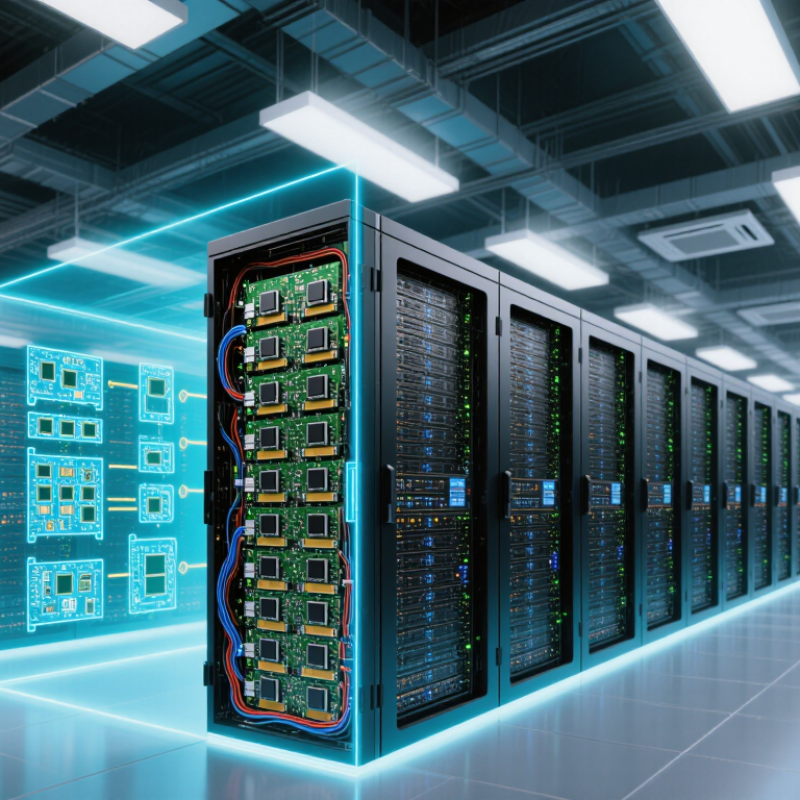
A leading AI computing server manufacturer is defined by more than peak processor counts. It must turn demanding workloads into reliable systems that run steadily under sustained heat and heavy utilization. Engineers should validate accelerator compatibility, memory bandwidth, high-speed networking, and storage performance together. A fast component can still become a bottleneck when the full system is poorly balanced.
Thermal design deserves close attention. In a test room, technicians can monitor inlet temperatures, fan speeds, and power draw while servers process large model-training jobs. Clear test records and repeatable benchmarks help buyers compare performance fairly. Practical details matter too: accessible service panels, replaceable fans, and well-labeled cables can reduce maintenance delays. Small things count.
Manufacturing quality also depends on consistent component sourcing, production checks, and dependable technical support. A capable supplier should explain system limits, power requirements, and upgrade paths without relying on vague claims. Support teams need to diagnose issues from logs and configuration details, not just offer generic advice. No checklist is perfect. Even careful lab testing may not predict every customer’s workload, so field feedback should lead to real design changes. A top manufacturer earns trust through measurable performance, honest communication, and systems that remain serviceable after deployment.
China’s AI server market is not a single contest between manufacturers. It is a layered system shaped by chip availability, data-center plans, and the needs of different buyers. Large cloud operators often order servers at scale, while research institutions and enterprises may favor smaller deployments with specific workloads. The same machine can look very different depending on its cooling, memory, and accelerator configuration.
Several types of suppliers serve this market. Some design complete systems and manage integration; others focus on manufacturing, boards, racks, or supporting software. Buyers also work with data-center operators and technical service teams, which can influence installation and maintenance choices. Procurement decisions depend on more than computing speed. Power use, delivery schedules, compatibility, and local support all matter.
The structure is not perfectly neat. Supply constraints can shift product choices, and a system optimized for model training may be a poor fit for everyday inference. That distinction matters. Comparing suppliers only by headline performance misses the details that determine real operating costs. I may be simplifying a market that changes quickly, but its central pattern is clear: demand, supply, and integration shape each other.
In China, AI computing servers are manufactured by several types of companies, not one single category. Established enterprise-server makers build complete systems for data centers. Original design manufacturers produce servers to customer specifications, while specialist infrastructure firms focus on high-density GPU platforms and liquid-cooling integration. Some technology companies also design systems for internal use, though they may not sell them as general products.
The work involves more than fitting accelerators into a chassis. Manufacturers select compatible processors, memory, network adapters, power supplies, and cooling components. A typical system might use multiple accelerator cards, high-speed links, and reinforced rails for a heavy rack. Each configuration needs thermal testing and workload validation. Details matter.
When comparing suppliers, buyers can examine published specifications, service coverage, production capacity, and independent test results. Ask how a system performs under sustained workloads, not only short benchmark runs. Also check replacement-part availability and support for software tools. A fast server that is difficult to maintain can become an expensive paperweight.
There is no dependable universal ranking without a defined workload and evaluation method. Training large models, serving inference requests, and running scientific simulations place different demands on hardware. The distinction between a manufacturer, a design partner, and a reseller can also be blurry. That is worth checking carefully.
China’s AI server manufacturers are distinguished by how well they combine accelerators, memory, networking, and power delivery. IDC’s China AI Infrastructure Market Tracking report put the country’s AI server market at about US$7.4 billion in 2023, up 82.5% year over year. That growth raises the bar: buyers need systems that sustain heavy workloads, not just impressive peak specifications.
Look for high-bandwidth memory, fast links between accelerators, and chassis designed for dense configurations. Liquid cooling can help control heat when racks run continuously, while modular power supplies make maintenance less disruptive. Software matters too. Strong products offer workload monitoring, compatibility with common AI frameworks, and clear diagnostics when a node slows down. Cooling matters. So does serviceability. IDC’s figures describe a fast-growing market, but they do not prove that every new system is efficient or dependable. Real performance depends on the workload, configuration, and support after installation.
Tips: Ask manufacturers for measured results on your own models and batch sizes. Check power draw, thermal performance, and replacement procedures. A small test cluster can reveal issues that a polished specification sheet may miss.
Market leadership is not a trophy measured by one shipment chart. IDC reported that worldwide server revenue reached $77.3 billion in the fourth quarter of 2024, up 91.3% year over year, with AI infrastructure demand driving growth. That figure describes the global market, not any single Chinese manufacturer. TrendForce forecast 2024 AI-server shipments at about 1.67 million units, a 41.5% annual increase. Forecasts are useful, but they are not audited deliveries.
To evaluate a manufacturer, compare verified shipments with revenue, repeat orders, and the share of systems designed for AI workloads. Ask whether its servers can run current accelerators, move data efficiently, and stay within power and cooling limits. Look for published test methods, service coverage, spare-parts availability, and clear warranty terms. Details matter: a rack that ships on time but lacks compatible networking can sit idle. Check whether performance claims name the workload, configuration, and measurement period. No single metric settles the question. Regional shipment data can also be incomplete, and I would treat unsupported market-share claims cautiously. A strong assessment may still have gaps; manufacturers do not disclose every customer or contract.
| Evaluation Dimension | What to Measure | Evidence to Check | How It Indicates Leadership |
|---|---|---|---|
| Market share | Share of AI server revenue or shipments in a clearly defined market, period, and product category. | Independent market-research reports; compare reporting periods, geographic coverage, and whether figures refer to revenue or units. | A consistently high share across comparable periods is stronger evidence than a single-year ranking. |
| Revenue and growth | Server-related revenue, year-over-year growth, and the proportion attributable to AI computing systems. | Audited financial statements, regulatory filings, and clearly explained segment disclosures. | Growth is meaningful when supported by disclosed, comparable figures rather than estimates without a stated method. |
| Deployment scale | Number and size of completed deployments, including systems delivered and put into service. | Public tender notices, customer acceptance records, project disclosures, and independently documented case studies. | Verified deployments show that products have moved beyond demonstrations into operational use. |
| Performance per unit | Measured compute throughput, memory capacity and bandwidth, interconnect performance, and performance per watt. | Reproducible benchmark results with disclosed hardware configuration, software, workload, and testing conditions. | Comparable, independently reproducible results help distinguish practical performance from headline specifications. |
| System integration | Compatibility and integration across processors, accelerators, memory, storage, networking, and cluster software. | Product documentation, interoperability tests, deployment records, and evidence of support for relevant computing platforms. | Reliable integration reduces deployment risk and makes systems more useful in multi-vendor data-center environments. |
| Manufacturing and delivery capacity | Production capability, delivery lead times, quality controls, and ability to support repeat orders. | Factory or quality-system audits, delivery records, procurement documentation, and warranty or failure-rate disclosures where available. | Consistent delivery and quality are essential indicators of the ability to serve large-scale projects. |
| Reliability and service | System availability, repair turnaround, spare-parts coverage, warranty terms, and technical-support response. | Service-level agreements, customer acceptance criteria, support records, and independently reviewed reliability data. | Strong lifecycle support matters because AI infrastructure must remain operational after installation. |
| Software and ecosystem | Availability of validated drivers, management tools, cluster software, developer resources, and application compatibility. | Software release documentation, compatibility lists, technical documentation, and evidence of successful application deployment. | A mature ecosystem can improve utilization and reduce the engineering effort required to operate a system. |
| Compliance and security | Applicable product certifications, cybersecurity controls, supply-chain documentation, and data-center requirements. | Valid certification records, security assessments, procurement requirements, and documented compliance processes. | Documented compliance helps buyers assess operational, regulatory, and security risks. |
| Evidence quality | Whether leadership claims are supported by current, independently verifiable, and consistently defined data. | Source publication date, methodology, scope, audit status, and agreement across independent sources. | Transparent, cross-checkable evidence is more reliable than unsupported rankings or promotional claims. |
Assessment note: No single metric establishes market leadership. Compare manufacturers using the same market definition and time period, and distinguish independently verified results from estimates or self-reported claims.
Enterprise-server makers build complete data-center systems. Design manufacturers produce systems to customer specifications, while specialist firms focus on dense accelerator platforms and liquid cooling.
A system may combine processors, memory, network adapters, power supplies, and multiple accelerator cards. Heavy racks may need reinforced rails. Small details matter.
Review specifications, production capacity, service coverage, and independent test results. Ask about replacement parts and software support, too.
Tests should identify the workload, hardware configuration, and measurement period. Sustained performance matters; a brief benchmark may miss heat or power problems.
No universal ranking works for every workload. Model training, inference, and scientific simulations place different demands on a server.
Worldwide server revenue reached $77.3 billion in the fourth quarter of 2024, according to reported figures. A forecast placed 2024 AI-server shipments near 1.67 million units, but a forecast is not an audited delivery count.
Compare verified shipments, revenue, repeat orders, and the share of systems designed for AI workloads. Check whether servers meet power, cooling, and networking needs.
It may lack compatible networking or adequate support. A rack can arrive on time and still be difficult to put to work.
Regional data can be incomplete, and companies may not disclose every customer or contract. I would leave room for doubt.
China’s AI computing server market includes manufacturers with different strengths, from large-scale production and supply-chain coordination to specialized system integration and customized deployments. A leading ai computing server manufacturer is defined not by a single product or headline specification, but by its ability to deliver reliable performance, expand capacity, support demanding workloads, and provide consistent technical service. The market’s structure reflects varied customer needs, including data-center infrastructure, research computing, and enterprise AI applications.
Manufacturers distinguish themselves through system architecture, accelerator compatibility, high-speed networking, cooling design, energy efficiency, and software and service support. To evaluate market leadership, buyers should consider product capability alongside manufacturing scale, delivery reliability, customer support, and adaptability to changing workloads. Comparing these factors offers a more balanced view of which manufacturers are positioned to serve China’s AI computing needs over the long term.
