Borevo Borevo

Top China Data Center AI Server Manufacturers?

Time:2026-10-25 Author:Mason
0%

China’s data center AI server market is expanding from training clusters to everyday inference workloads. Buyers now compare more than accelerator counts. They examine memory capacity, networking, cooling, software support, delivery records, and long-term service.

A credible data center ai server manufacturer must prove performance under sustained workloads. Test results should show power draw, thermal behavior, rack density, and failure recovery. Inspur, H3C, Lenovo, and Huawei are widely discussed China-based suppliers. Each serves different combinations of cloud, enterprise, research, and national infrastructure projects. Their product strengths are not identical. That difference matters.

NVIDIA founder and CEO Jensen Huang said, “AI factories are the new infrastructure of the world.” His statement explains why server selection now affects an entire facility. It influences electricity planning, liquid-cooling design, network architecture, and operating budgets. This guide evaluates leading Chinese manufacturers through those practical lenses. It also considers accelerator compatibility, domestic supply-chain options, technical support, and documented deployment experience. No ranking can be completely objective. Procurement priorities change between a university laboratory and a hyperscale cloud provider. Public specifications may also hide differences in software maturity or service quality. That uncertainty deserves attention. Readers should verify current configurations, certifications, customer references, and independent test data before signing a purchase agreement. The strongest choice may not be the fastest server. It may be the system that remains stable, serviceable, and financially defensible after years of continuous operation.
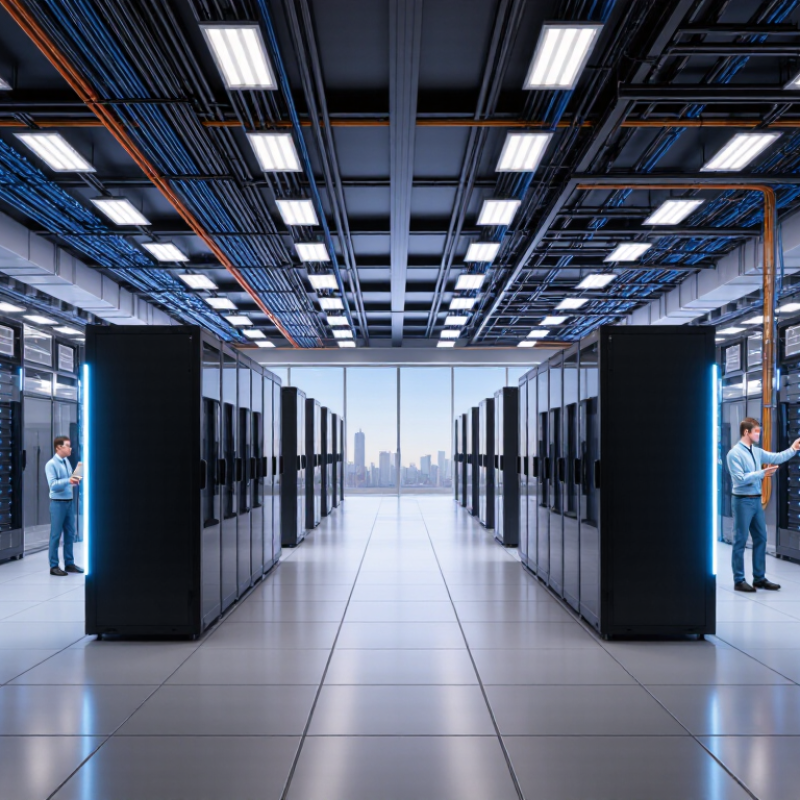
Top China Data Center AI Server Manufacturers?

What Defines a Leading Chinese Data Center AI Server Manufacturer?

A leading Chinese data center AI server manufacturer is defined by more than fast processors. It must convert demanding workloads into stable, measurable performance. Experienced teams study GPU density, memory bandwidth, network latency, and rack power before recommending a configuration. Cooling matters greatly. A rack running above 30 kilowatts needs careful airflow planning, liquid cooling options, and reliable temperature monitoring. Small design errors can reduce uptime.

Engineering depth also separates serious manufacturers from ordinary assemblers. Strong suppliers test servers under sustained AI workloads, not only short benchmark bursts. They document firmware versions, component traceability, failure rates, and repair procedures. Independent certifications and transparent test records add authority. Local manufacturing experience can improve customization, but it should never replace evidence. I have seen impressive specifications lose value when remote support responds slowly or replacement parts arrive late. That weakness deserves honest attention.

Tips: Request a workload-based pilot before placing a large order. Check performance over several days, not several minutes. Ask for power readings at idle and full load. Confirm support response times, spare-part locations, warranty limits, and firmware update policies. Review how the manufacturer handles thermal alarms and failed accelerators. A reliable partner explains trade-offs clearly, including noise, energy use, and expansion limits. No platform is perfect. The better choice is the one whose risks are visible, tested, and manageable.

Core Technologies Used in China’s AI Server Industry

China’s AI server industry is shifting from raw computing power toward tightly integrated systems. Accelerator chips remain central, but memory bandwidth often limits real performance. High-bandwidth memory feeds large models faster, while PCIe 5.0 and advanced switching reduce data movement delays. TrendForce estimated global AI server shipments would exceed 1.6 million units in 2024, showing strong demand for these technologies.

Domestic manufacturers also focus on distributed training. Several servers connect through high-speed interconnects, allowing thousands of accelerators to act as one computing pool. This design needs efficient collective communication, fault detection, and software scheduling. IDC’s China AI Infrastructure research has repeatedly identified software-hardware coordination as a major competitiveness factor. Hardware alone is not enough.

Cooling has become equally practical. Direct-to-chip liquid cooling can remove heat more efficiently than traditional air systems, especially in dense racks. Power conversion, thermal monitoring, and workload scheduling reduce operating costs. The China Academy of Information and Communications Technology has reported rapid growth in intelligent computing infrastructure, but published figures are not always comparable. Definitions differ between AI servers, intelligent computing centers, and general data-center capacity. That weakness deserves more attention. Field testing should examine sustained performance, energy use, repair time, and model accuracy, not only peak benchmark scores.

Top Chinese Manufacturers of Data Center AI Servers

China’s leading data center AI server manufacturers are not defined by chip access alone. The strongest suppliers combine motherboard engineering, thermal design, rack integration, and long-term service. Several domestic manufacturers build AI servers with accelerators, high-speed networking, and redundant power systems. Others specialize in ODM production for cloud providers and research institutions. Their practical advantage often appears in deployment details, not brochures.

A credible comparison should examine validated performance, delivery consistency, firmware quality, and support coverage. Look for systems that sustain workloads under heat, noise, and power limits. Liquid cooling is increasingly relevant for dense training racks. Air cooling may remain simpler for inference rooms. Chinese manufacturers with mature supply chains can offer flexible configurations and localized maintenance. However, accelerator availability can change quickly because of trade rules and procurement requirements. Buyers should verify every specification.

From an engineering perspective, the best choice depends on workload. Training clusters need fast interconnects, large memory capacity, and careful airflow planning. Inference deployments may value compact nodes, predictable latency, and easy replacement. Field testing matters more than a polished datasheet. I would question optimistic efficiency figures; real workloads rarely match laboratory conditions. A pilot rack, clear service agreements, and component-level monitoring can reveal weaknesses before expansion. Some suppliers may still lack mature software ecosystems. That deserves honest attention.

How Chinese AI Server Makers Compare by Performance and Scale

Chinese AI server manufacturers compete through a mix of performance, delivery capacity, and system engineering. In practical testing, accelerator speed matters, but it is only one part of the result. Memory bandwidth, cooling design, network latency, and software compatibility can change real workloads significantly. A server that performs well in a laboratory may slow down during long training sessions.

Scale also separates manufacturers. Larger producers usually offer broader configurations, stronger supply coordination, and faster replacement support. Smaller specialists may provide more flexible designs for private data centers or research teams. However, production volume does not automatically mean better efficiency. Power usage, rack density, maintenance access, and deployment time deserve equal attention. No scorecard is perfect.

Tips: Test identical workloads before purchase. Measure training time, inference latency, power draw, and downtime risk. Ask for sustained results, not only peak figures. Check whether local engineers can resolve firmware and integration issues. Keep records from a real pilot rack; paper comparisons often miss uncomfortable details. A useful review should include failures, because they reveal how dependable the system really is.

Key Buying Factors for China-Made AI Data Center Servers

Top China Data Center AI Server Manufacturers?

When evaluating China-made AI data center servers, performance is only one buying factor. Start with GPU compatibility, memory capacity, and high-speed interconnects. These determine whether training jobs run smoothly across multiple nodes. Check thermal design carefully. Dense racks may require liquid cooling, stronger airflow, or upgraded power distribution.

Reliability needs practical testing, not only specification sheets. Request burn-in results, failure-rate data, firmware procedures, and spare-part availability. Confirm support response times and remote diagnostic capabilities. Review local certification, data protection requirements, and export restrictions for your operating region. A lower purchase price can become expensive when maintenance is slow. This is often overlooked. I have seen teams compare processors closely, then underestimate installation and electricity costs.

Tips: Ask for a complete workload demonstration using your models and datasets. Measure tokens per second, network latency, power draw, and recovery time. Test mixed workloads, because ideal laboratory results may not represent daily use. Keep at least one configuration option flexible. Hardware roadmaps change, and today’s best accelerator may not remain the easiest to support. Also inspect cable layout and service access before deployment. Small physical details can delay repairs. Do not accept vague promises about availability; request written delivery schedules and warranty terms. Some buyers focus too much on peak speed, while operational stability usually matters more.

Top China Data Center AI Server Manufacturers? Key Buying Factors for China-Made AI Data Center Servers

Reference procurement scoring model for evaluating China-made AI data center servers. Scores are out of 10 and reflect practical priorities such as performance, deployment efficiency, reliability, power consumption, serviceability, and total cost of ownership—not vendor or brand rankings.

How to use this chart: Prioritize accelerator compatibility and performance first, then verify power efficiency, thermal design, networking, hardware reliability, local service capability, and long-term operating cost against the requirements of your data center.

FAQS

What technologies most affect AI server performance?

Accelerator chips provide core computing power, but memory bandwidth often limits real performance. High-bandwidth memory feeds large models faster. High-speed interconnects reduce delays between servers. Software coordination remains essential.

Why is distributed training important for large AI models?

Distributed training connects multiple servers into one computing pool. Efficient communication helps thousands of accelerators work together. Scheduling software assigns workloads and detects failures. More machines do not guarantee better results.

How should cooling be evaluated in dense server racks?

Dense racks may need direct-to-chip liquid cooling. It removes heat more efficiently than ordinary airflow. Check thermal monitoring, power conversion, and maintenance access. Heat matters daily.

Which performance measurements should buyers request?

Request training time, inference latency, power draw, and recovery time. Test identical workloads on comparable configurations. Measure sustained performance, not only peak benchmark scores. Peak numbers can mislead.

How can buyers compare different server manufacturers fairly?

Use the same models, datasets, and workload settings. Compare memory capacity, network latency, cooling, and software compatibility. Larger suppliers may offer faster replacement support. Smaller specialists may provide more flexible designs.

What reliability information should a buyer request?

Ask for burn-in results, failure-rate data, firmware procedures, and spare-part availability. Confirm remote diagnostic options and support response times. Request written warranty terms. Vague promises are risky.

What operating costs are easy to overlook?

Consider installation, electricity, cooling, maintenance, and downtime. Inspect cable layout and service access before deployment. A cheaper server may cost more during repairs. This deserves more attention.

How should a pilot deployment be organized?

Test one real rack with production-like workloads. Record power use, sustained speed, faults, repair time, and model accuracy. Include mixed workloads, not only ideal tests. Keep notes about failures. They reveal uncomfortable weaknesses.

Conclusion

China’s data center AI server industry is developing around high computing density, energy efficiency, system reliability, and flexible deployment. A leading data center ai server manufacturer typically combines advanced processor integration, high-speed interconnects, liquid or optimized air cooling, intelligent power management, and software designed for large-scale AI training and inference. These technologies help servers handle demanding workloads while improving stability and operational efficiency.

Chinese manufacturers differ in performance and scale according to computing capacity, customization options, supply-chain coordination, and service capabilities. When comparing solutions, buyers should evaluate accelerator compatibility, memory and storage expansion, networking speed, thermal design, power consumption, security, maintenance support, and total ownership cost. The most suitable China-made AI server should match the organization’s workload, data center infrastructure, deployment schedule, and long-term growth plans rather than relying on specifications alone.

Mason

Mason

Mason is a seasoned marketing professional with a deep expertise in the company's offerings and a passion for driving brand awareness. With a strong background in digital marketing strategies, he has an innate ability to connect with diverse audiences and effectively communicate product benefits.......